

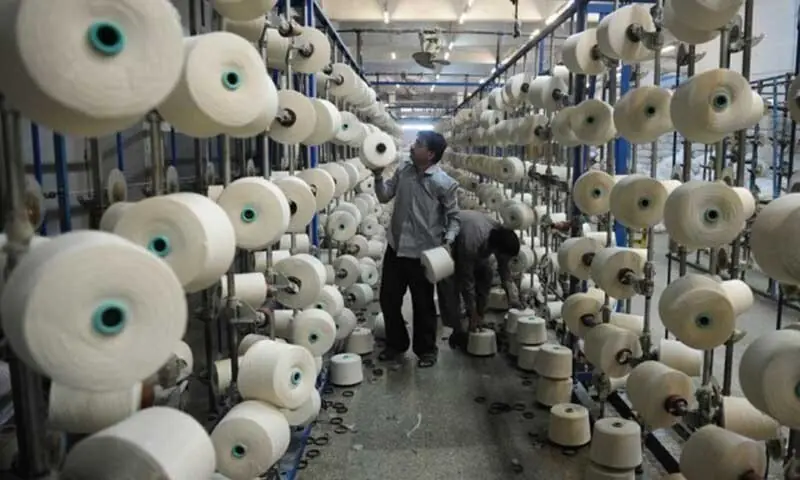
ISLAMABAD: Pakistan’s textile and clothing exports fell by 1.99 per cent in September, marking the second consecutive month of negative growth.
Official data shows that textile and clothing exports dropped to $1.57bn from $1.61bn in September 2024. This follows a sharper 7.34pc decline in August, reflecting ongoing challenges in the sector.
The drop in September extends the volatility seen in the textile industry, which had witnessed a sharp rebound of over 30pc in July, the first month of the current fiscal year. The contrast between the months underscores the fluctuating demand in global markets and persistent domestic issues affecting the sector.
Modest quarterly growth
For the first quarter of FY26 (July-September), textile and clothing exports saw a modest increase of 5.63pc, rising to $4.77bn compared to $4.52bn in the same period last year. The quarterly growth was supported by higher exports of yarn and made-up articles, though overall performance was weaker in September.
Oil imports decreased by 6.79pc during July-September FY26
The data also showed that while knitwear exports increased by 3.76pc in value, other categories such as bedwear, towels, and cotton cloth saw a decline. Bedwear exports fell by 0.92pc in value and 1.61pc in quantity, while towel exports decreased by 5.02pc in value. Cotton cloth exports saw a significant drop, falling 25.32pc in value and 20.56pc in quantity. The continued decline in value-added exports highlights concerns among industry stakeholders about the rising cost of doing business in Pakistan, which is affecting the sector’s competitiveness relative to regional markets.
Key performers
Yarn exports surged by 21.66pc in September, providing a rare positive highlight in the overall export performance. However, the export of raw cotton also showed a sharp rise, increasing by 100pc, suggesting that Pakistan may be facing supply constraints in key value-added segments. The export of synthetic fibres and textile machinery, however, saw notable increases, reflecting a growing demand for these items. Synthetic fibre imports rose by 55.94pc, while imports of synthetic and artificial silk yarn grew by 9.48pc.
Despite these positives, challenges persist. Textile players have repeatedly highlighted structural issues within the sector, including the delayed release of refunds and rebates, which have put pressure on exporters. As a result, the sector’s performance has remained static despite Pakistan’s $25bn installed textile capacity.
Oil imports fall
Pakistan’s oil import bill also showed a negative growth of 6.79pc in the first quarter of FY26, falling to $3.775bn from $4.049bn in the same period last year. The decline reflects weaker demand, particularly for petroleum products. Data shows a 3.08pc increase in the value of petroleum products, driven by a 14.75pc rise in quantity, suggesting a shift in the types of oil products being imported.
Crude oil imports saw a marginal decrease of 0.15pc, with a 9.92pc rise in quantity, indicating that local refineries are processing more crude oil despite the lower imports. On the other hand, imports of liquefied natural gas (LNG) and liquefied petroleum gas (LPG) fell by 30.2pc and 2.04pc, respectively, reflecting reduced demand for energy products.
Implications on economy
The decline in both textile exports and oil imports offers a mixed picture of Pakistan’s economic performance. While the textile sector’s struggles reflect a global trend of shifting demand and domestic challenges, the drop in oil imports signals slower economic activity, with reduced capacity utilisation in local refineries and lower transportation needs.
Policymakers will need to address structural challenges in the textile sector, including high costs, delayed refunds, and competitiveness, to support future growth. Similarly, the decline in oil imports indicates that the broader economy may continue to face headwinds unless domestic consumption picks up.


